Pro-Tips: How to Achieve a Mirror Finish in Tight Spaces
If you’ve been at the bench for any length of time, you know the frustration. You’ve spent hours on a piece, but there’s that one tiny recessed corner or a narrow slot that you just can’t reach with a standard file or a bulky emery stick. In the Australian jewellery and mould-making trade, the difference between a “good” job and a “masterpiece” is often found in those hard-to-reach places.
Today, I’m breaking down the best way to tackle precision finishing without losing your mind—or your patience.
1. Stop Forcing the Wrong Tool
The biggest mistake I see blokes make is trying to “make do” with a worn-down needle file or a bit of sandpaper wrapped around a toothpick. It’s inconsistent, it’s slow, and it usually ends up rounding off the crisp edges you worked so hard to create.
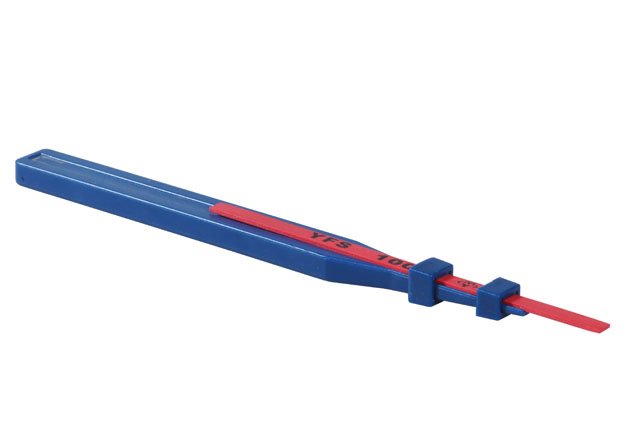
For precision work, you need a tool that has the rigidity of a stone but the flexibility of a fiber. That’s where Ceramic Fiber Polishing Stones come into play. Because they are made of high-tensile ceramic fibers, you can actually grind them down to a needle-thin point, and they won’t snap the second you put a bit of “welly” into the polish.
2. The Secret is the Sequence
A mirror finish isn’t magic; it’s just a series of scratches that get progressively smaller. If you jump from a coarse #320 grit straight to a #1500, you’re going to be there all day trying to hide the deep marks.
In my workshop, I follow the “Rule of Doubling.” I start with a #320 YFS stone to clear the tool marks, move to a #600, then #1000, and finally a #1500. By the time you hit that 1500 grit, the surface should already have a dull shine. If you see a deep scratch at the end, don’t try to buff it out—go back two grits and do it properly.
3. Use a Dedicated Handle
Your hands will thank you. Using these stones by hand is fine for a quick touch-up, but for a full afternoon of mould polishing, you need an ergonomic grip. A proper clamp handle (like the one included in our YFS 4-Piece Set) gives you much better leverage and prevents the stone from vibrating in your fingers, which is essential if you’re using an ultrasonic polisher.
4. Keep it Clean
One of the best things about ceramic fiber stones is that they don’t clog (or “load up”) like traditional oil stones. However, a quick dip in some lubricant or even just keeping the surface clear of debris ensures the fibers are always cutting at 100% efficiency.
Why Quality Matters in the Aussie Workshop
We’ve all bought cheap gear that looked the part but fell apart the first time it hit hardened steel. When you’re working on a high-value gemstone setting or an expensive injection mould, a snapped stone can cause a gouge that takes hours to fix. Investing in Quality YFS stones means you’re getting a tool that holds its shape and stays sharp.
Final Verdict
If you’re tired of “close enough” finishes, it’s time to upgrade your abrasive kit. Precision finishing is a craft, and like any craft, you’re only as good as the tools in your hand.
Ready to level up your finishing game? Check out the full range of /Ceramic Fiber Polishing Stones at Burfitt Tools and get fast shipping across Australia.